If you’ve ever ordered “biscotti” alongside your coffee, there’s a good chance what you were actually eating were cantucci — the original almond biscuit from Tuscany, and the reason the word “biscotti” exists in the first place. Here’s what makes them different, where they come from, and how Italians actually eat them.
Biscotti vs. Cantucci: What’s the Actual Difference
“Biscotti” is a generic Italian word meaning “cookies” — it doesn’t refer to one specific type. Cantucci are a specific style of biscotti: hard, oblong, almond-studded cookies that are baked twice. In fact, the word “biscotto” itself comes from the Latin bis coctus, meaning “twice-cooked” — a direct reference to the baking method cantucci are named for.
In the US, “biscotti” has become the catch-all term for this style of cookie, but in Italy, if you ask for cantucci, you’ll get something very specific: dense, crunchy, almond-forward, and unmistakably from Tuscany.
Origin Story: Prato, Tuscany
Cantucci originated in Prato, a city near Florence, where the twice-baking method was developed as a way to extend shelf life without any artificial preservatives — the low moisture content from double-baking does the work naturally. This makes cantucci one of Italy’s original “shelf-stable” foods, centuries before the term existed.
The Real Way to Eat Cantucci
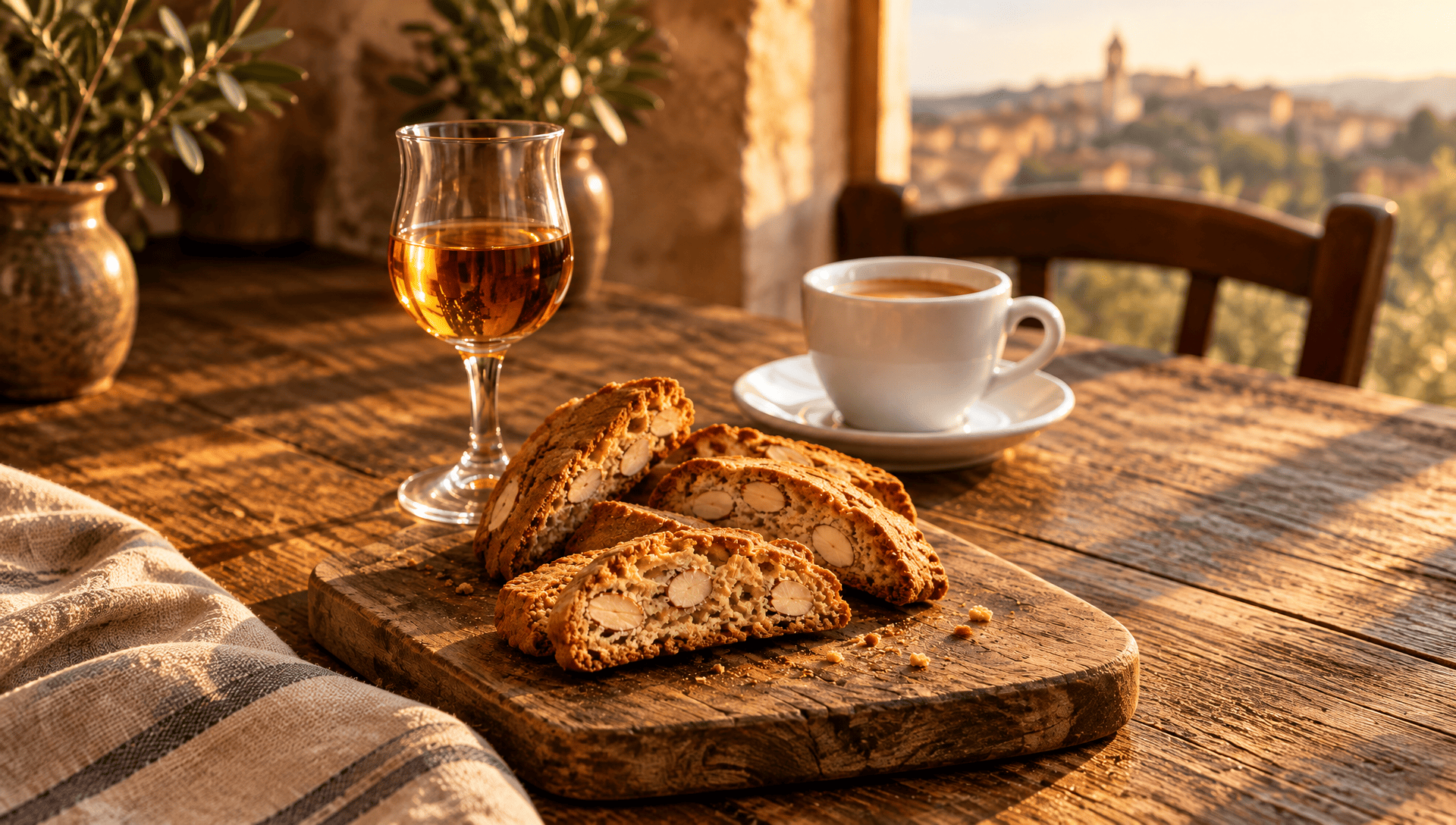
In Italy, cantucci are traditionally served with Vin Santo, a sweet Tuscan dessert wine — you dip the cookie into the wine, let it soften slightly, and eat it that way. It’s less about biting and more about dunking.
Outside of a dinner setting, your morning espresso or cappuccino works just as well. The dry, crunchy texture of cantucci is specifically built for dipping — they’re not meant to be eaten straight the way a soft cookie would be, and part of the appeal comes from that contrast between crunchy biscuit and warm liquid.
No Butter, No Shortcuts
Traditional cantucci recipes are notably simple: flour, sugar, eggs, and almonds — no butter, unlike most Western cookie recipes. This is part of what gives them their signature dry, crunchy texture, and it’s also why they hold up so well as a pantry staple with a long shelf life.
Where to Find Authentic Cantucci in the US
Not all “biscotti” sold in the US are made to traditional cantucci specifications — many use butter-heavy recipes that produce a softer, less authentic texture. Look for products explicitly made in Italy, with almonds as a primary ingredient and a genuinely crunchy, twice-baked texture.
Ready to try the real thing? [Shop GINO Cantucci →]