Both are technically “filled pasta.” Both show up on Italian menus and in grocery freezer aisles under similar branding. But tortellini and ravioli are genuinely different products, with different origins, shapes, and traditional uses — here’s how to tell them apart, and why it matters.
Shape and Construction
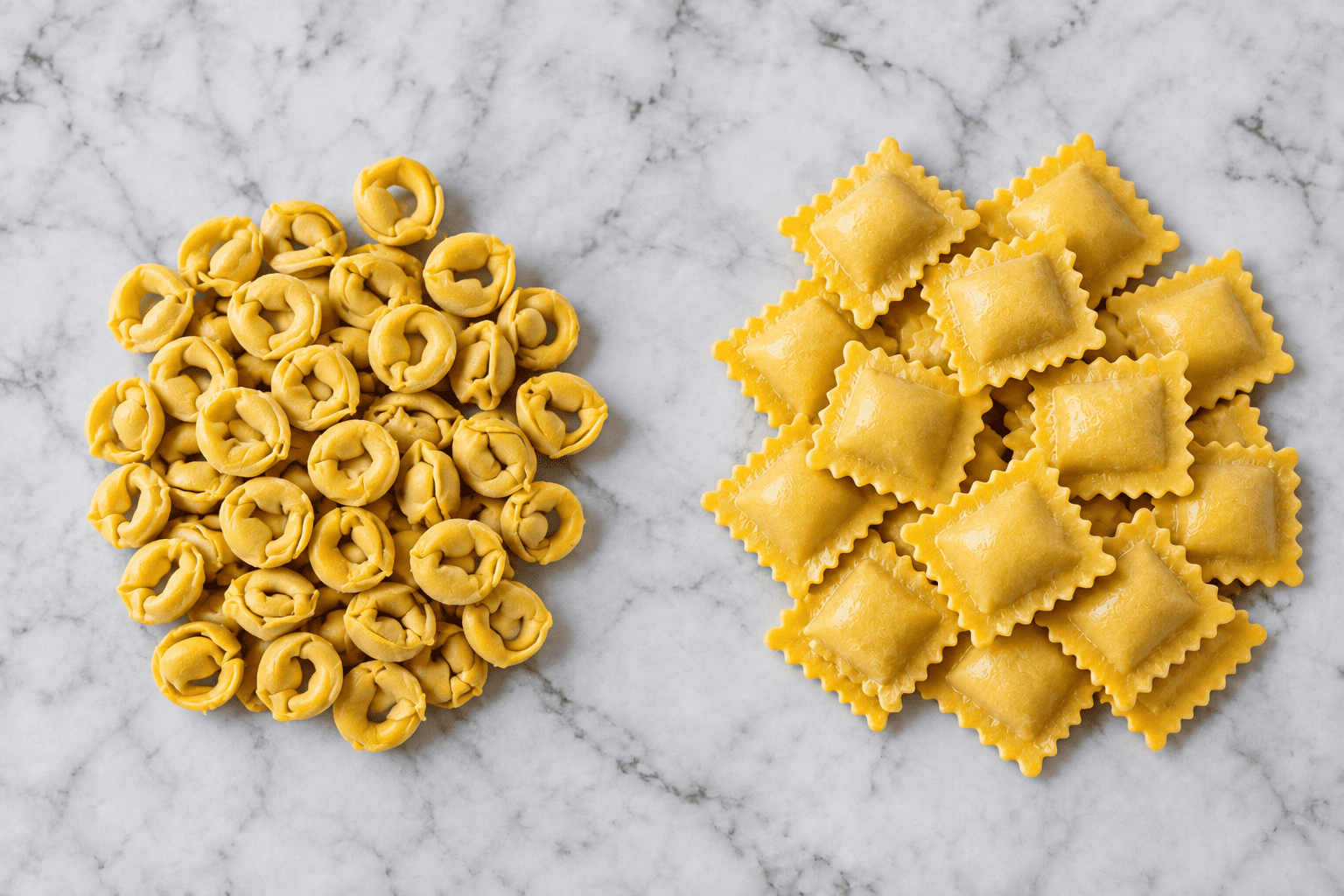
The most obvious difference is shape. Ravioli are typically square or round pockets — two flat layers of pasta sealed around a filling, similar in concept to a dumpling. Tortellini, on the other hand, are formed by folding a small round or square of pasta around the filling and then wrapping the ends around a finger to create a distinctive ring shape, often compared to a belly button (a shape with its own well-known Italian legend behind it).
This construction difference isn’t just cosmetic — it affects how each holds sauce, how it cooks, and how it’s traditionally served.
Regional Origins
Ravioli has broad roots across Italy, with regional variations in shape and filling found from Liguria to the South. Tortellini, specifically, has a strong and well-documented origin in Emilia-Romagna, particularly around Bologna and Modena — a region so associated with the shape that it’s practically synonymous with it.
Traditional Fillings and Sauces
Ravioli fillings vary enormously by region — ricotta and spinach, pumpkin, meat, even fish, depending on where in Italy you are. Tortellini fillings are more traditionally standardized, often built around a mix of meats (like pork and prosciutto) or, in more modern and widely available versions, cheese-based fillings.
Sauce pairing also differs by tradition: tortellini is classically served in brodo (in broth) in Emilia-Romagna, though cream and butter-based sauces are common outside that region. Ravioli is more commonly served with a dressed sauce — butter and sage, tomato, or cream-based preparations — rather than in broth.
How to Cook and Serve Each Properly
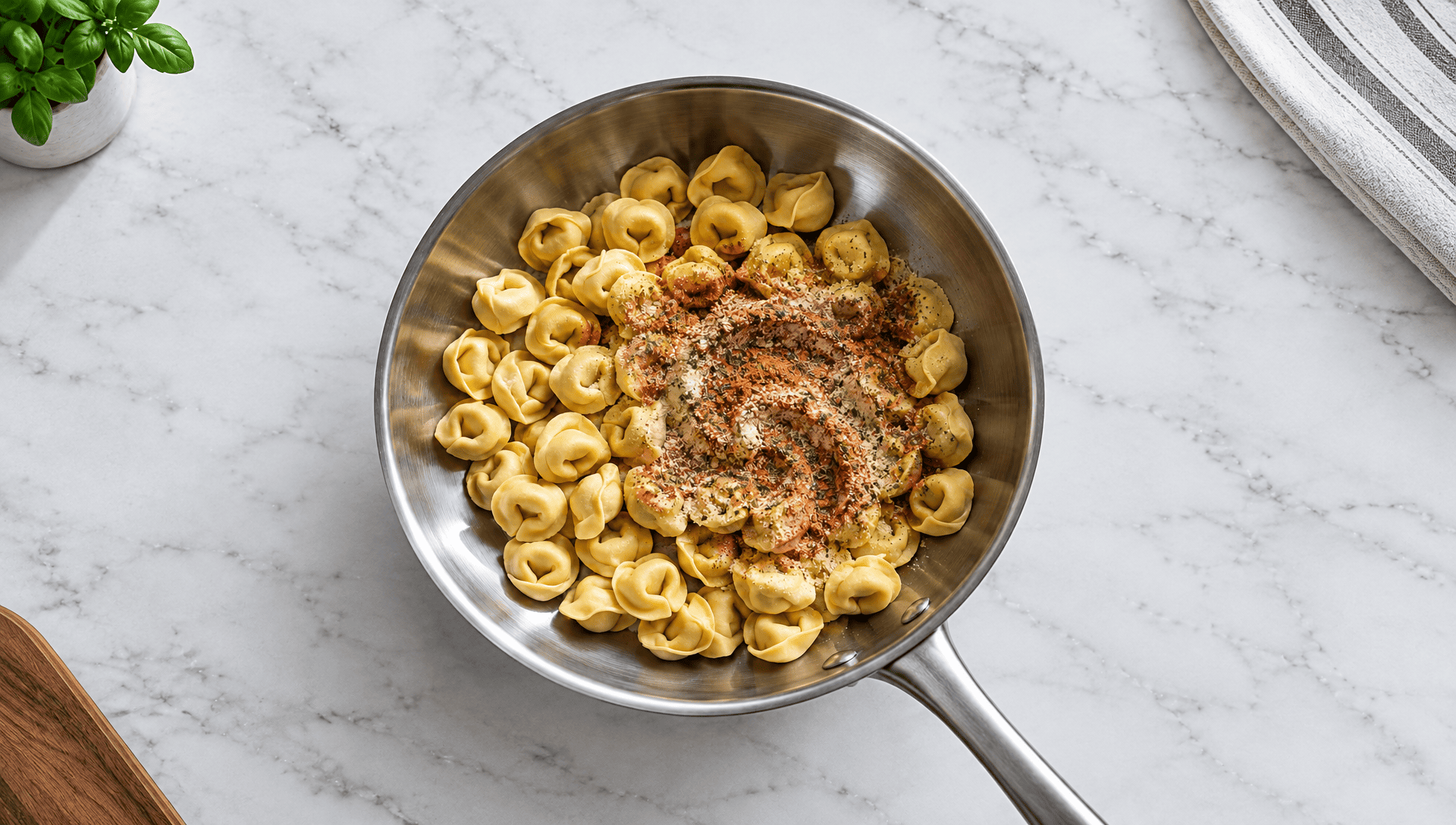
Both fresh and dried filled pasta generally require careful attention to cooking time to protect the filling and pasta texture — for shelf-stable dried filled pasta, this is typically around 10 minutes in gently boiling water, versus a much shorter cook time for fresh, refrigerated versions. Timing matters more with filled pasta than with plain pasta shapes, since overcooking risks the pasta splitting and the filling escaping.
The Bottom Line
Tortellini and ravioli are cousins, not twins. If you’re shopping for either, understanding the shape, origin, and traditional pairing helps set the right expectations — and helps you choose the sauce that will actually do the dish justice.