For decades, filled pasta in retail has meant one of two things: fresh (short shelf life, refrigerated) or frozen (long shelf life, cold chain-dependent). Ambient, shelf-stable filled pasta is a relatively newer category — and one that’s reshaping how category managers think about logistics costs, shelf space, and assortment planning.
Here’s a practical comparison for buyers evaluating the two formats.
The Hidden Cost of Cold Chain Logistics
Frozen filled pasta requires an unbroken cold chain from production to the freezer case — and every link in that chain carries a cost. Refrigerated trucking, freezer warehousing, and in-store freezer maintenance all add operational expense that doesn’t show up on a per-unit cost sheet but absolutely affects category profitability.
Shelf-stable filled pasta removes this requirement entirely. Products can be shipped, stored, and displayed at ambient temperature, which simplifies the entire supply chain — from the manufacturer’s warehouse to the store shelf.
Shelf Life Comparison
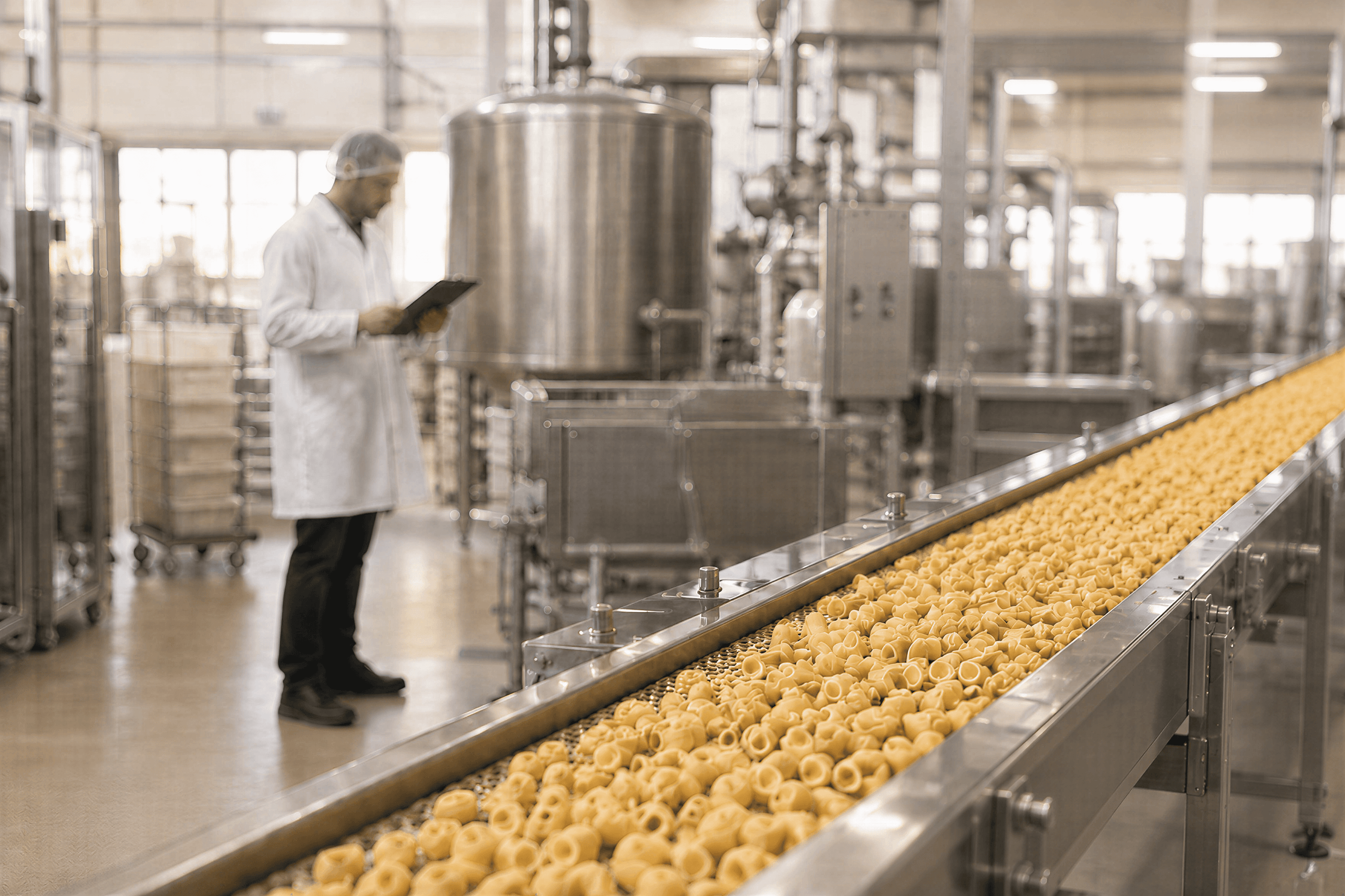
A well-engineered shelf-stable filled pasta product, using controlled drying and water activity (Aw) reduction, can achieve 9+ months of shelf life at room temperature without artificial preservatives. This is achieved through the drying process itself, not through additives — an important distinction for clean label positioning.
Frozen pasta typically offers comparable or longer shelf life, but only as long as the cold chain remains unbroken. Any gap — a delayed truck, a warehouse power issue — introduces risk that ambient products simply don’t carry.
Space Efficiency at Warehouse and Shelf Level
Freezer space is expensive and limited, both in distribution centers and on the sales floor. Shelf-stable filled pasta competes for standard dry grocery shelf space, which is typically more abundant and less costly to allocate than freezer footage — giving category managers more flexibility in assortment planning and promotional placement.
Sustainability and CO2 Impact
Eliminating the cold chain has a measurable environmental benefit: refrigerated transport and storage are significantly more energy-intensive than ambient equivalents. For retailers with sustainability commitments in their supply chain, shifting part of the filled pasta assortment to shelf-stable formats is a concrete lever — not a marketing claim, but an operational one, tied directly to reduced energy consumption in transport and storage.
When Frozen Still Makes Sense
Shelf-stable isn’t a replacement for every use case. Frozen filled pasta still holds advantages in categories where the product benefits from a raw, uncooked texture on arrival, or where a retailer’s freezer footprint is already well-utilized and cold chain costs are absorbed at scale. The right approach for most assortments is complementary, not either/or — using shelf-stable formats to extend reach into channels and formats where freezer space isn’t viable (convenience, travel retail, smaller-format stores).
The Bottom Line
For category managers evaluating filled pasta assortment, shelf-stable formats offer a compelling combination of logistics simplicity, cost control, and reduced environmental impact — without compromising on shelf life or product quality when produced with the right drying technology.
Want a side-by-side logistics comparison for your category? [Download our shelf-stable vs. frozen cost comparison sheet →]